
Three Hours Inside a Recording Studio
Seeing Stereophonic Live

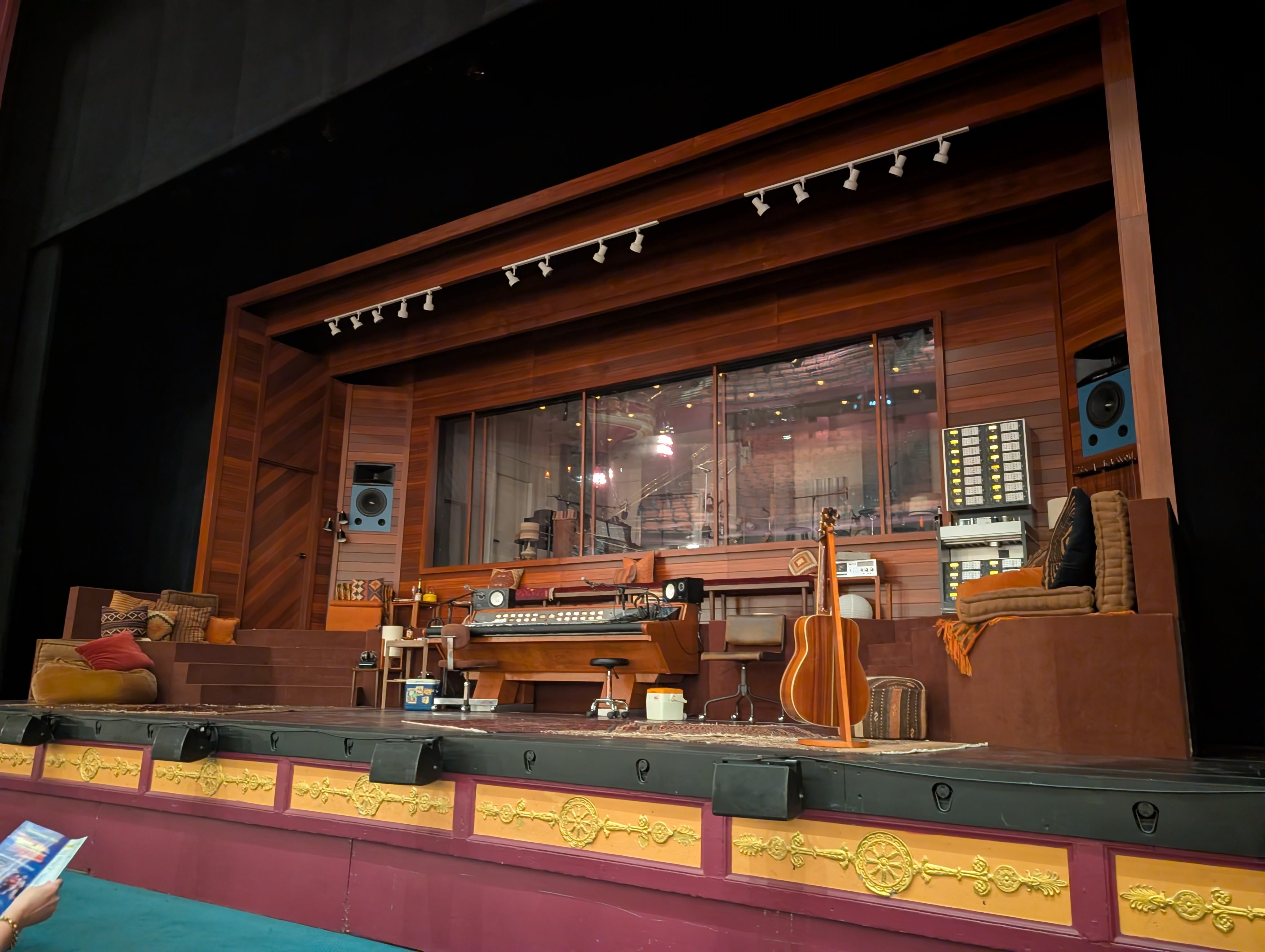
About a week ago, I made my way downtown on a particularly eerie Tuesday night. Since the hostile takeover of the Kennedy Center, I had recently decided to move my patronage of musical theater, and purchased season tickets to the National Theather.
This worked out for me quite well, since the National Theater this season was playing The Book of Mormon, a show I’ve been wanting to see for quite some time. In my season ticket bundle, I also added a night for Stereophonic, a 2024 Tony Award-winning play.
So, on a Tuesday night, I jumped on a bus that took me straight down 14th street and dropped me off nearly outside the door of the theater in about 30 minutes.
The National Theater is about a block or two from the White House. And this particular Tuesday night happened to correspond with the State of the Union—a fact which I seemed to have forgotten somewhere between the morning and my bus ride later that night. Security was high, and secret service cars lined the blocks between my destination and the executive office.
But a night at a show felt like a good distraction from whatever was happening on the American stage, just a few miles away from me.
Stereophonic is a play with music—not a musical! — about a fictional 1970s band recording their second album, exploring the creative and personal tensions that threaten to break them apart as they approach superstardom.
Does that sound familiar?
Well, that’s because the play is not so subtly based on Fleetwood Mac’s recording of their second album Rumours, a recording session that has been well-documented and elevated into rock and roll mythology.
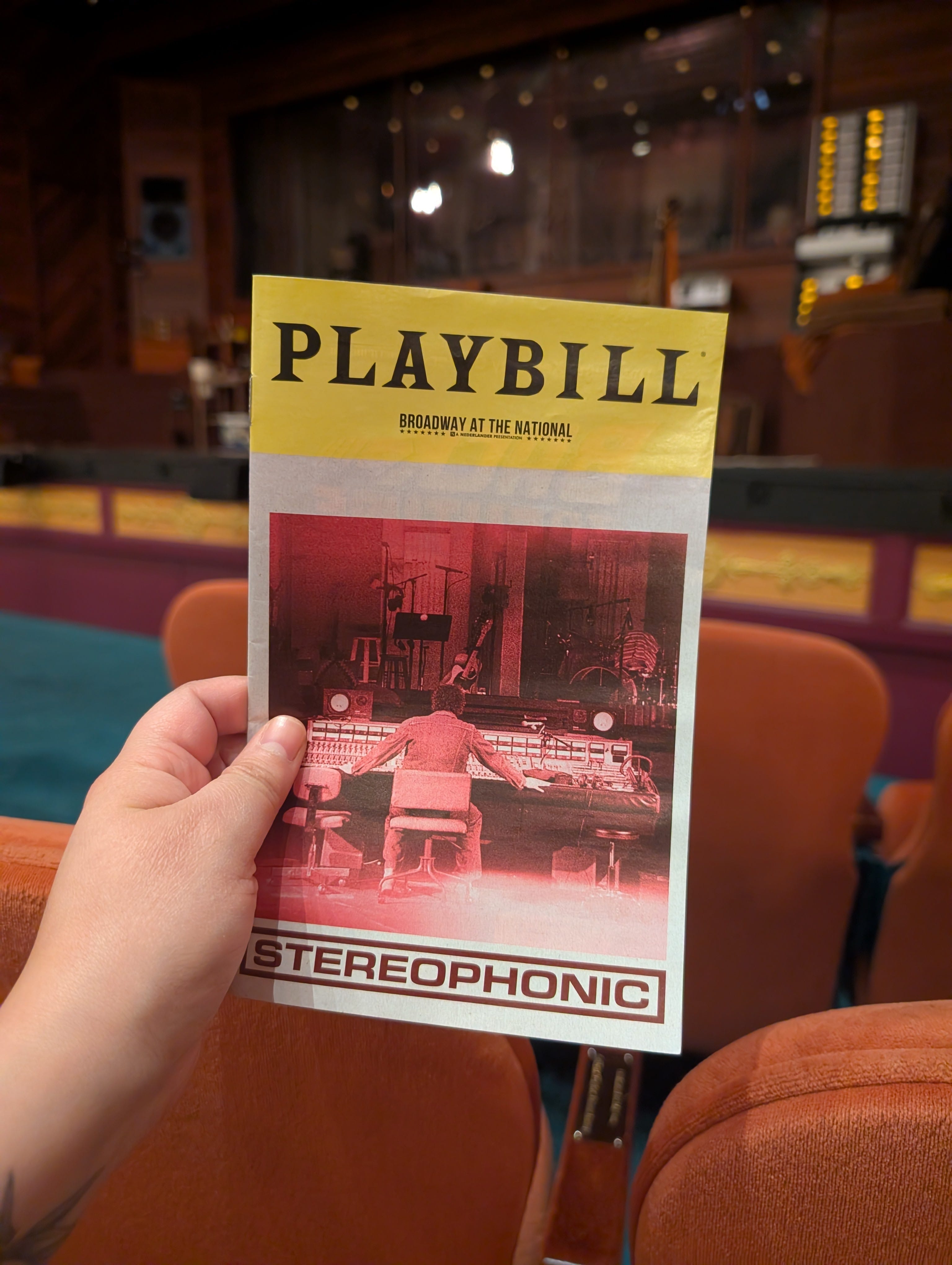
The general backdrop of the story intrigued me. The entire play takes place inside a recording studio—one mostly set in Sausalito, California. Every scene, drama, conflict, interaction, takes place within those walls, and we, the audience, are mere bystanders as it unfolds. We are like the coworker who only hears bits and pieces of their colleagues’ personal dramas after they’ve lived their entire lives outside the office. One day (or scene) a couple is breaking up, the next, they’ve gotten back together. We don’t get to witness the breaking or reconciling first-hand, because why would all that occur inside the walls of a recording studio?
Despite the awards and recognition, the play seems to be having a rough national tour (at least here in DC). My particular show was more than half empty (perhaps everyone wanted to stay home for the State of the Union?). In fact, I was given a new seat from the mezzanine to the third row of the orchestra. The staff told me this was because of an obstructed view for my seat, but group after group was given new tickets and moved to the ground level. The entire second row in the center orchestra was empty during the performance.
The national tour for Stereophonic is called a “radio-edit,” running just under three hours, with intermission. This seemed like a normal night at the theater to me. But many online forums found this runtime to feel too long and tedious, “like nothing happened.”
I think perhaps the first point of confusion for most people is that Stereophonic is not a musical, despite it so heavily promoting its music. The original score is composed by Will Butler of Arcade Fire. Trailers for the show highlight the songs. And there are several song-heavy scenes. However, the show is first and foremost and dramatic play.
This was a fact that even I was confused about, up until about a few weeks before I went to see Stereophonic. I had convinced myself the show was going to be a musical, so I can understand the confusion. But I do think knowing this was going to be a play really put me in a different mindset, and aligned my expectations.
As for the rest, I did not find the show boring. I enjoy music, the making of music, the nerdy, nitty-gritty experience of putting together a record. I enjoy stories that are more about getting to know characters, rather than some big, dramatic plot unfolding. So, the fly-on-the-wall experience really did work for me.
The part that did feel bit tiresome to me was the thinly veiled representation of Fleetwood Mac. In the play, the band at the center of the drama consists of 5 members, 3 British and 2 American. The Americans came into the group as a couple, and are a couple at the start of the show. Two of the British members are married, but breaking up, then getting back together, then breaking up again. The band mate who is also producing the album has a complex with one of his brothers, who just so happens to be an Olympic swimmer and is competing in the Montreal Olympics during the first act of the play. As I later discovered, Linsday Buckingham’s brother won a silver medal at the Mexico Olympics in 1968.
But I think this is why people are drawn to Stereophonic. After the play, while I waited for my bus, a group in their 20s spent nearly half an hour talking about the show, who was who, and how their stage characters compared to their real-life counterparts. The man sitting next to me at one point during intermission said to his wife “Oh, the Lindsay Buckingham character.”
There is a strong desire to watch this show and say, “oh I know this person.” You already feel like you know their backstory and what will happen next.
To me, this was a distraction. The off-brand Fleetwood Mac drama might pull people into the room, but at the end of the day, it just feels like you couldn’t get the life rights to the story you wanted to tell.
I would have much preferred a show that while still may be inspired by the band and their hit record, instead had characters that had internal conflicts of their own. I don’t need to see a 1:1 representation of Stevie Nicks or Christie McVie. A band going through growing pains as they experience superstardom is interesting in its own right.
Funnily, that same week, I hosted another vinyl listening party to the theme of Lovers & Haterz in honor of the month of love. Rumours, being a classic album about the tumultuousness of love, was on my playlist.
The album, all on its own, tells us a story. It perhaps gives us some insight into who these people were, the kinds of relationships they had, their conflicts. I can understand the draw to know more—to create a sort of fantasy or fan-fiction about what it must have been like to be there through it all.
This is not to say I didn’t enjoy Stereophonic. In the end, I think I enjoyed it more than most, or at least more than the comments I find under the paid advertisements on Facebook.
The art we create, while certainly holding something near the truth, is also a kind of fiction. I don’t need this pretend contextualization of the album to give me insight into what happened during the making of that record. I can read about it firsthand.
When it comes to Rumours, I think I’d much rather sit in my living room, and let the record play.